

Key Points
- Australian standard pallet size is 1165 x 1165mm, designed for local transport systems like RACE containers.
- International export pallets are commonly 1100 x 1100mm to suit ISO shipping containers.
- Euro pallets measure 1200 x 800mm and are standard across Europe.
- Export pallets must meet ISPM 15 standards via heat treatment for biosecurity compliance.
- Timber pallets are preferred globally for their durability, customisability, and sustainability.
Standards differ between regions to reflect what is more efficient and safe for local industries – pallet sizes are no different. This guide will give you an understanding of the pallet sizes commonly used in Australia and internationally, so you can determine which pallets suit your needs best.
What are Australian standard pallet sizes?
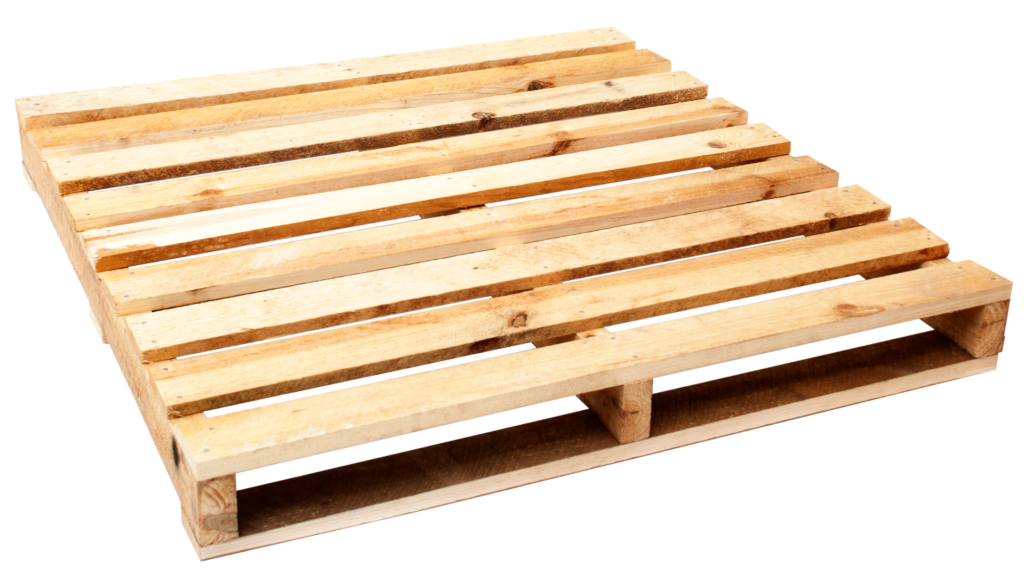
Aligned with AS:4068-1993 (flat pallets for materials handling), the most common standard Australian pallet is a square measuring 1165 x 1165mm. This is designed to fit into Australia’s logistics infrastructure, particularly the RACE container used by Australian railways. One RACE container can fit 20 standard Australian pallets.
Standardisation helps to ensure compliance with regulatory requirements. It also means that pallets are suited for use across Australian warehousing, transportation, and for handling equipment commonly used nationwide.
Depending on the weight capacity requirements, these may be pine pallets (softwood) or hardwood pallets. Most Australian domestic-use pallets will have a load capacity from 500kg to 2000kg, ranging from 19mm (lightweight) boards to 25mm (heavy duty) depending on intended use.
Why are Australian standard pallets a different size?
Our standard pallet size was originally developed after World War II when Australia, taking inspiration from the materials handling of the United States, started to palletise transport of goods. The original size was 46 x 46 inches – with the adoption of the metric system, Australia decided to retain the unique standard pallet size and simply convert it to metric measurements.
Does every industry use the standard pallet size?
Not necessarily – while 1165mm x 1165mm is the Australian standard size, some industries use other sizes that better suit their needs.
You might also see these terms:
- Lightweight pallets – These are designed to reduce weight and therefore cost.
- Medium duty pallets – Common for lighter loads or a one-way journey.
- Heavy duty pallets – For a heavy payload or where you need maximum durability for repeated use.
These are terms to categorise the weight and load-bearing capacity of the pallets – not necessarily a reflection of the dimensions.
If your order has a specific capacity requirement that is outside of the usual range, get in touch with our team and find out how we can use the world-leading Pallet Design System™ (PDS) to maximise durability, performance and safety.
What are international standard pallet sizes?
By ‘international pallets’, people usually mean export pallets – the pallets that you would typically use to ship goods from one country to another. While each country and region may have their own sizes, the most used size for international export pallets is 1100mm x 1100mm.
They’re smaller than the domestic pallets because they need to fit in more compact spaces for transport, namely the standard ISO shipping containers that are used around the globe. The Australian standard size can’t be used for international shipping because that size is only really suited for domestic transport options – exporters wouldn’t be able to efficiently pack Australian standard pallets in ISO containers, as they’re narrower than the RACE container.
International pallets for export
Unlike domestic pallets, export pallets need to be treated for pests to account for biosecurity risk to the destination port. Most places have adopted the ISPM 15 standards, which means pallets need to be either heat treated or fumigated – with heat treatment being the most effective option to make wooden pallets ISPM 15 compliant.
Our export pallets are heat-treated in our onsite facilities, along with other timber packing products for exporters like crates or gluts. Because the heat has to be maintained for at least 30 minutes at a constant minimum temperature to sterilise the timber, moisture is drawn out of the wood as well – resulting in a lighter weight than untreated pallets, which is ideal for transport to foreign ports.
Related: ISPM 15 Pallets: Everything You Need to Know
What about Euro pallets?
EPAL ‘Euro pallets’ are different from standard international pallets as they are typically 1200mm x 800mm rather than square.
While EPAL certified pallets are region specific and aren’t manufactured outside of Europe, you can get pallets made to equivalent size for export from Australia if need be – we have manufactured these for clients many times as part of our wide range of pallet options.
Standard pallets: Why timber is best for shipping pallets
Wood is a renewable source, especially when pallet manufacturers use sustainable supply chains. It’s relatively cheap, almost endlessly customisable, and easy to recycle once it has reached the end of its lifespan.
While plastic pallets are available from some suppliers, timber is the more practical choice for many uses:
- Wood can be repaired. Wooden pallets can usually be repaired by simply replacing the part, unlike moulded plastic which may need to be recycled for further use.
- Wood pallets can be stacked higher. In warehousing or storage, and in transport, wooden pallets are often preferred because they are less slippery for handling machinery like forklifts, and can be stacked higher than plastic.
- Wood can hold a heavier load. While modern plastic pallets are fairly durable, timber pallets are able to hold a higher weight rating in most cases. This makes them suitable not just for transporting smaller goods, but also for packing mining equipment or other heavy duty machinery.
Related: Wooden vs Plastic Pallets
Other common pallet types & configurations
West Coast Pallets & Crates can supply any size and configuration you need with our pallet design software (PDS) and custom pallet service. Some of our common options include:
Racking pallets
A racking pallet has an offset bottom lead board and a wide lead (the first and last boards on the bottom of the pallet). This means that when they go into a pallet racking system, the design of the pallet “locks” it into place.
Hardwood pallets
Hardwood is used to increase the weight capacity, pest resistance, and overall durability of pallets. It’s a heavier, denser material that we source from private land, plantations or ecological thinning to ensure we only use sustainably sourced timber.
EHB compliant pallets
This is a material requirement. European House Borer (EHB) pallets have to be marked as being manufactured from genuine heartwood, and contain the registered code of the supplier so they can be traced back if necessary. West Coast Pallets & Crates can supply EHB compliant pallets.
Skids
While not technically a pallet, skids are commonly used in transportation of goods and can be a great cost-effective option. Skids are wood pallets without bottom deck boards, so they’re more lightweight – ideal if you have static storage needs, for rigid items, or for storing sheet materials and heavy equipment.
Choosing the Right Pallet Supplier
Partnering with the right supplier can help you avoid potential stumbling blocks that can set your schedule back.
Working with West Coast Pallets & Crates means partnering with a trusted manufacturer. We’re WA’s only PEFC-certified pallet supplier; our commitment to sourcing only sustainably grown timber from responsibly managed forests means we’re able to ensure a constant supply of quality timber for our pallets. That means we can get right to work on your order – and we also keep common sizes in stock at our facility, so many orders can be fulfilled right away.
Why not contact our team today to talk about your requirements, or to request a quote. Whether you need Australian standard pallets, international pallets for export, or a custom size and configuration, West Coast Pallets & Crates will get you sorted – fast.